
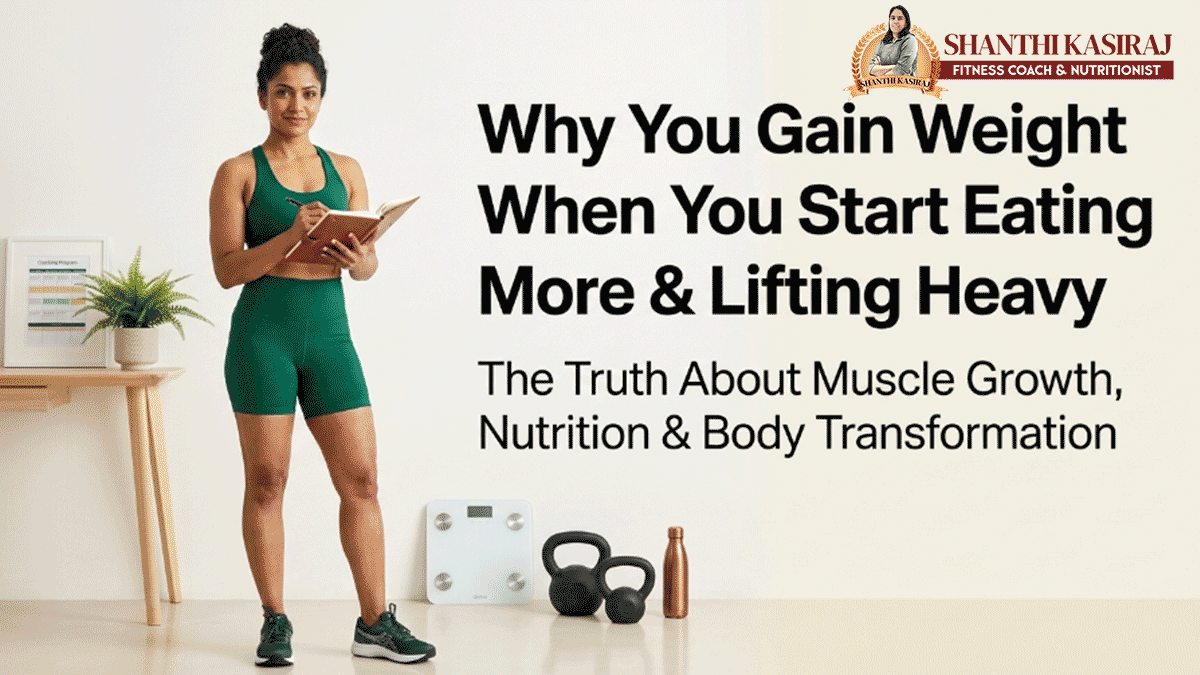
If you’ve recently started strength training and increased your food intake, stepping on the scale and seeing your weight go up can feel frustrating. Many people assume that gaining weight automatically means gaining fat. However, when you begin lifting heavier weights and fueling your body properly, weight gain is often a sign that your body is adapting positively.
Understanding why this happens can help you stay motivated and avoid abandoning a fitness plan that’s actually working.
The Scale Doesn’t Tell the Whole Story
Weight is made up of several components, including:
- Muscle mass
- Body fat
- Water
- Glycogen (stored carbohydrates)
- Bone density
- Digestive contents
When you start eating more and training hard, changes in these components can increase your body weight without increasing body fat significantly.
1. You’re Building Muscle
One of the biggest reasons for weight gain during strength training is muscle growth.
When you lift weights, your muscles experience tiny tears. During recovery, your body repairs these fibers, making them stronger and often larger than before. This process, known as muscle hypertrophy, requires adequate calories and protein.
Muscle is denser than fat, meaning it takes up less space while weighing more. As a result, you may gain weight while simultaneously looking leaner and more toned.
Signs You’re Gaining Muscle
- Increased strength in workouts
- Improved muscle definition
- Better posture
- Clothes fitting differently
- Measurements decreasing despite stable or increasing weight
2. Increased Glycogen Storage
When you start eating more carbohydrates, your body stores extra energy as glycogen in your muscles and liver.
Glycogen is essential for:
- Strength training performance
- Recovery
- Energy production
For every gram of glycogen stored, your body retains approximately 3 to 4 grams of water.
This means that increased glycogen stores can quickly add a few kilograms to the scale without any fat gain.
3. Water Retention From Hard Training
Heavy lifting creates inflammation as part of the muscle recovery process.
This temporary inflammation causes your body to hold additional water around the muscles. While this may make you weigh more, it’s actually a normal and healthy response to exercise.
Water retention is especially common when:
- Starting a new workout program
- Increasing workout intensity
- Training larger muscle groups
- Increasing carbohydrate intake
4. You’re Eating More Food
Simply having more food in your digestive system can increase your body weight.
When you transition from restrictive dieting to eating enough calories for performance and recovery, your stomach and intestines contain more food throughout the day.
This can temporarily increase scale weight even though it has nothing to do with body fat.
5. Improved Recovery Leads to Better Performance
Many people spend months or years under-eating while trying to lose weight.
When they finally start consuming enough calories:
- Workouts improve
- Recovery speeds up
- Hormone function improves
- Muscle growth increases
The body becomes healthier and stronger, even if scale weight rises slightly.
How to Know If You’re Gaining Muscle or Fat
Instead of relying solely on body weight, track multiple indicators.
Measure Your Progress Using:
Body Measurements
Track:
- Waist
- Hips
- Thighs
- Arms
- Chest
A shrinking waist combined with stable or increasing weight often indicates muscle gain.
Progress Photos
Take photos every 2 to 4 weeks under similar lighting and conditions.
Visual changes often reveal progress that the scale misses.
Strength Levels
If your lifts are increasing consistently, you’re likely building muscle and improving fitness.
How Your Clothes Fit
Many people notice looser waistbands and better-fitting clothing despite gaining weight.
When Weight Gain May Be Fat Gain
Not all weight gain is muscle.
If you’re consuming significantly more calories than your body needs, excess calories can be stored as fat.
Possible signs include:
- Rapid weight gain over several months
- Increasing waist circumference
- Reduced muscle definition
- No significant improvements in strength
A moderate calorie surplus combined with progressive strength training is typically the best approach for building muscle while minimizing fat gain.
Focus on Body Composition, Not Just Weight
Your goal should be improving body composition—the ratio of muscle to fat—not simply weighing less.
A person who weighs 70 kg with higher muscle mass often looks leaner, stronger, and healthier than someone who weighs 65 kg with less muscle.
This is why fitness professionals encourage clients to focus on:
- Strength gains
- Energy levels
- Measurements
- Performance
- Overall health
rather than obsessing over the number on the scale.
Final Thoughts
Gaining weight when you start eating more and lifting heavy is often a completely normal part of the fitness journey. Increased muscle mass, glycogen storage, water retention, and improved recovery can all contribute to a higher scale weight without indicating fat gain.
Instead of judging progress by weight alone, pay attention to how your body looks, feels, and performs. If you’re getting stronger, feeling healthier, and noticing positive changes in your physique, you’re likely moving in the right direction—even if the scale says otherwise.
FAQs
1. Is it normal to gain weight when you start lifting weights?
Yes. Weight gain is common when starting strength training because your body stores more glycogen and water while building muscle. This doesn’t necessarily mean you’re gaining fat.
2. How much weight gain is normal when starting a weightlifting program?
Many people gain between 1–3 kg during the first few weeks due to increased muscle glycogen, water retention, and muscle growth. The exact amount varies based on diet, training intensity, and body composition.
3. Can I gain muscle and lose fat at the same time?
Yes. Beginners, people returning to exercise, and those with higher body fat levels can often experience body recomposition, where they build muscle while losing fat simultaneously.
4. Why does the scale go up when I eat more protein and carbohydrates?
Protein supports muscle growth, while carbohydrates increase glycogen stores in your muscles. Glycogen holds water, which can temporarily increase body weight.
5. How can I tell if I’m gaining muscle instead of fat?
Track your waist measurements, progress photos, strength levels, and how your clothes fit. Increased strength and muscle definition often indicate muscle gain rather than fat gain.
6. Does lifting heavy weights make you bulky?
No. Building large amounts of muscle takes years of consistent training, proper nutrition, and often specific bodybuilding programs. Most people become leaner, stronger, and more toned.
7. Should I stop eating more if I notice weight gain?
Not necessarily. If the weight gain is due to muscle growth and improved recovery, reducing calories too soon could slow your progress. Focus on body composition rather than the scale alone.
8. How long does water retention last after starting strength training?
Water retention is usually temporary and often decreases as your body adapts to your training program. It can last from a few days to several weeks.
9. Can strength training help with long-term weight management?
Yes. Strength training increases muscle mass, which can boost your resting metabolism and help maintain a healthy body composition over time.
10. Why do my clothes fit better even though I weigh more?
Muscle is denser than fat and takes up less space. As you gain muscle and lose fat, your body may become leaner and more toned despite an increase in scale weight.
11. How often should I weigh myself when building muscle?
Weighing yourself once per week under the same conditions is generally enough. Daily fluctuations due to water, food intake, and hormones can be misleading.
12. What is body recomposition?
Body recomposition is the process of gaining muscle while losing fat at the same time. This often results in noticeable physical changes without dramatic changes in body weight.